
Caught in a vicious grip of inflation, the government on Wednesday announced that the south-west monsoon, crucial for the nation's agricultural well being, would be near normal this season. "India Meteorological Department's long range-forecast for the 2008 south-west monsoon season is that the rainfall for the country as a whole is likely to be near normal," Earth Sciences Minister Kapil Sibal told reporters in New Delhi.
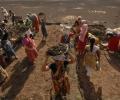
Around 40 per cent of the country is staring at drought-like conditions ahead of the monsoon as water levels have receded sharply.

Assocham-Skymet report says untimely rain may reappear in north India.

S&P Global Ratings on Monday retained India's GDP growth forecast at 6 per cent saying it will be the fastest growing economy among Asia Pacific nations. The GDP growth forecast for the current and the next fiscal has been kept unchanged from the forecast made in March partly on account of domestic resilience. "We see the fastest growth at about 6 per cent in India, Vietnam, and the Philippines, S&P Global Ratings said in its quarterly economic update for Asia-Pacific.

"Conditions are favourable for the onset of southwest monsoon over Kerala and its further advance into some more parts of south Arabian sea, remaining parts of Maldives - Comorin area, some parts of Tamil Nadu and some more parts of Bay of Bengal during the next 24 hours," said a statement by the Indian Meteorological Department.

Monsoons have had limited effect on market returns for a given year, report Sachin Mampatta and Sundar Sethuraman.

Eight people were killed and five injured in rain-related incidents across Maharashtra where several parts were lashed by heavy rains on Friday.

A deficient rainfall season starts with heavy showers.

'Equity investing should be for longer than a year's perspective.'
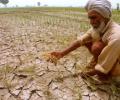
The India Meteorological Department's first monsoon forecast for this year would have gladdened many a heart with the hope of plentiful rain, after two drought years.

More than 39.8 lakh people in 27 of the 33 districts in the state were affected by the deluge on Thursday.
India, hit by a devastating drought last year that hurt economic growth, is expected to experience a below normal monsoon this year.

The Reserve Bank of India on Friday revised upwards the GDP growth projection for the current fiscal to 7.2 per cent from 7 per cent on rising private consumption and revival of demand in rural areas. Unveiling the bi-monthly monetary policy, RBI Governor Shaktikanta Das said estimates released by the National Statistical Office (NSO) placed India's real gross domestic product (GDP) growth at 8.2 per cent in 2023-24. "During 2024-25 so far, domestic economic activity has maintained resilience," he said, adding that manufacturing activity continues to gain ground on the back of strengthening domestic demand.

Global experts last week gave the same forecast.

They are worried at more than one forecast of a possibly weak monsoon, reports Dilip Kumar Jha.

The El Nino impact on the Indian monsoon typically manifests by way of extended break in rainfall.

The mercury in Delhi, which recorded its hottest day of the year so far at 45.6 degrees Celsius on Sunday, came down to 42.4 degrees Celsius, according to the India meteorological department.

IMF cut its 2016 global growth forecast for the fourth time in the past year to 3.2 per cent, citing China's slowdown.
Commission for Agriculture Costs and Prices cairman Ashok Gulati tells Business Standard that IMD's prediction should be taken with a pinch of salt, as data shows there is usually a deviation of eight-10 per cent from the standard margin of error in many met predictions.

The Reserve Bank of India on Friday raised the retail inflation forecast for 2021-22 to 5.7 per cent due to supply side constraints, high crude oil and raw materials cost. The RBI in June had pegged the retail inflation estimate at 5.1 per cent for the current financial year. The RBI has the mandate to keep inflation in a band of 2-4 per cent, with a tolerance level of 2 per cent on either side.
Southwest monsoon, critical for the farm-based economy of the country, is expected to reach Kerala on May 30, two days before its normal onset date in the coastal state.

This could have huge implications for agriculture, food prices, supply and overall economic growth of the country

This is the first cyclone in the Bay of Bengal this pre-monsoon season.

RBI lowers GDP forecast for FY16 to 7.4%

Government sources said Modi will also chair meetings to review the aftermath of the Cyclone Remal, especially in the north east region hit by natural disasters.

The RBI's projection for WPI inflation for this fiscal is 5.5 per cent.

'The private sector believes that some enablers in labour-intensive sectors like apparel, toys, tourism, and media retail, can unlock a lot of jobs.'

The North-West is expected to be hit the most.

It has also advanced into most parts of Tamil Nadu, some parts of south interior Karnataka and remaining parts of south Bay of Bengal, according to IMD.

Weak monsoon rains could have a negative impact on India's automobile sector which is seeing early signs of improvement with the sale of passenger cars and utility vehicles rising in May.
The Southwest monsoon, crucial for agriculture across the country, has entered a weak phase and is expected to revive in the next two days. The weathermen have forecast strong westerly winds over the peninsular region, which is expected to aid the advance of monsoon in the next two days. Monsoon is expected to reach Mumbai by June 10.

A prolonged break in monsoon rains in most parts of the country is threatening to hit the yield of kharif crops. It could even delay the upcoming rabi sowing. Major agricultural states, such as Maharashtra, Madhya Pradesh, Andhra Pradesh, Punjab, and Gujarat, have witnessed a deficit of 30-80 per cent in southwest monsoon rainfall in August compared to the long-period average for the month. Meteorologists see no big revival in monsoon rains from hereon, though they forecast "some activity" over the Bay of Bengal on September 5-6.
Reserve Bank of India governor Bimal Jalan said on Monday the economy was likely to grow 6 per cent in the current financial year.

The southwest monsoon is set to make its exit in style, bringing rains to the parched parts of Uttar Pradesh and Bihar, as weather forecasters have picked up signs of formation of a cyclonic circulation over Bay of Bengal. Addressing a press conference in New Delhi, India Meteorological Department (IMD) director general Mrutyunjay Mohapatra on Thursday junked last week's forecast of early withdrawal of southwest monsoon and announced the extended stay of the seasonal showers. "Even though we expected early withdrawal of the southwest monsoon, a cyclonic circulation over west-central and adjoining northwest Bay of Bengal will shift the monsoon trough southwards around September 7.

Drought fears will subside if the momentum generated is maintained in August.
Experts agree with the assessment that the Budget next month would respond to the predictions of deficient monsoon rains with a policy package. According to them, rain-fed areas, which are likely to be affected by a 'below normal' monsoon, could see increase in allocation in terms of higher spending through the public distribution system and the National Rural Employment Guarantee Scheme.
